
Nilotica’s Low Melting Point: A Skincare Advantage You Can Feel
Share
Imagine a butter that melts at the touch of your fingers, moisturising and nourishing in an instant. That's the experience of East African Nilotica shea butter. In the world of natural cosmetic ingredients, Nilotica shea butter is characterised by its low melting point – a simple property that makes all the difference to the way it feels on your skin.
The Science Behind Melting Point
In chemistry, the melting point is the temperature at which a substance begins to change from a solid to a liquid state. In skincare, it is the point at which butter begins to soften and melt.
Have you ever noticed that coconut oil becomes liquid on a warm day or that cocoa butter remains solid when not heated? That's the melting point in action. A low melting point means that a butter will soften at a lower temperature, close to skin temperature, whereas a butter with a higher melting point needs more heat to liquefy.
The Nilotica Difference
Nilotica shea butter has a lower melting point than most cosmetic butters. It softens at around 28–32 °C (82–90 °F), just below the temperature of the skin's surface (about 32–34 °C). West African shea butter usually needs more warmth to melt completely (often 35–45 °C), and cocoa butter melts at around 34–38 °C.
In Practice
It means that Nilotica shea butter is softer at room temperature and practically melts on contact with your skin. A jar of Nilotica shea butter has a creamy, smooth texture even in a cool room, whereas West African shea or cocoa butter can feel stiff or waxy until warmed.
The secret is in the composition: Nilotica shea butter is richer in oleic acid (around 60–70%, a fatty acid that is liquid at room temperature) and lower in stearic acid (a harder fat). This makes it naturally softer, and even semi-liquid when warm.
What You’ll Notice
1. Melts on Contact
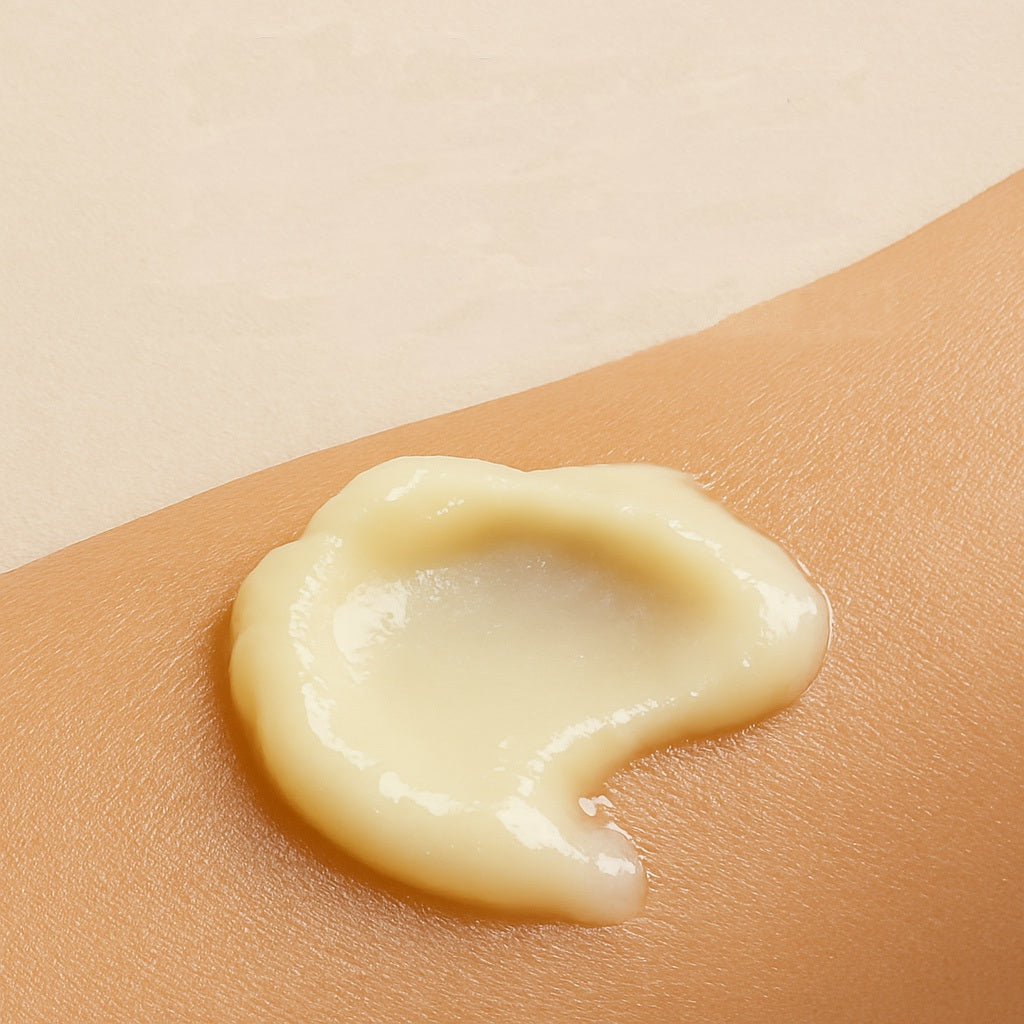
The moment Nilotica shea butter touches your skin, it begins to melt into a silky oil, because the skin's surface is at or just above its melting range. It glides on effortlessly: no hard rubbing, no waiting for it to soften, no heating.
2. Absorbs Without a Greasy Film
As it melts, Nilotica spreads into a thin, even layer that sinks into the skin's surface rather than sitting on top. Many people find it doesn't feel greasy, leaving skin soft with a velvety finish rather than an oily sheen.
3. Soft, Whipped Texture
In the jar, Nilotica shea butter has a soft, creamy texture. Unlike harder cocoa or traditional shea butter, you don't have to chisel out chunks or warm it up — it's ready to use straight away.
4. Delicate Scent
East African Nilotica shea butter has a mild scent — light, neutral, with a faint nutty sweetness. It won't overpower your senses or clash with other fragrances: a subtle note, perfect for minimalist beauty routines.
Product Storage
Because of its low melting point, Nilotica shea butter is temperature-sensitive. This softness is part of its charm, but it means a little care when storing it.
- Store in a cool, dry place, below 25 °C (77 °F), away from direct sunlight and heat sources.
- If the butter melts, there's no need to worry: simply stir gently and let it set again.
- Refrigeration can help in a heatwave, but let it return to room temperature before use to regain its softness.
- A slightly grainy texture after re-setting is normal and harmless. To restore smoothness, melt it fully (to about 40 °C) and cool it quickly.
Why Melting Point Matters
The low melting point of Nilotica shea butter is not just a technical detail: it is what makes it so pleasant to use. From the moment you open the jar to the second it melts into your skin, Nilotica shows how a natural, minimally processed ingredient can feel exceptional on the skin.